Are you thinking about cold exposure and ice therapy, but not sure where to start? We have prepared a basic overview just for you, explaining what happens in the body when it comes into contact with cold and how to gradually include cold exposure in everyday life.
Cold exposure has long since stopped being just a discipline for winter swimmers. Cold water is increasingly becoming part of sports recovery, modern wellness, and a lifestyle focused on long-term vitality.
One of the best forms of cold exposure is Cold Water Immersion (CWI) – partial or complete immersion of the body in cold water. The principle is simple: the body is exposed to cold for a short period of time and gradually learns to respond to this stimulus.
It is not about achieving the lowest possible temperature or staying in the water for as long as possible. Regularity, gradual adaptation, and the ability to perceive the reactions of your own body are far more important.
 What happens when you stay in cold water?
Cold water represents a significant physiological stimulus for the body. The body reacts almost immediately – blood flow in the surface parts of the body changes, breathing speeds up, and mechanisms that help maintain a stable body temperature are activated.
That is why the first moments in cold water tend to be the most intense. With regular cold exposure, however, the body can gradually adapt to the cold, and its reaction becomes easier to manage.
This principle of gradual adaptation is one of the reasons why working with cold is now appearing not only in sport, but also in modern wellness, the longevity approach, and biohacking.
What role does brown fat play in cold exposure?
An interesting part of the body’s response to cold is brown adipose tissue. Unlike ordinary white fat, which mainly stores energy, brown fat uses energy to generate heat. In cold exposure, it therefore comes into play in several ways:
- It burns energy to produce heat: it does not store energy, but burns it during thermogenesis, meaning heat production.
- It has high metabolic activity: when maximally activated, approximately 50 g of brown fat may, according to some model estimates, consume up to around 500 calories per day.
- It is activated by cold: its activity is supported by cold exposure, a cold shower, or time spent in a cold environment.
- Impact on metabolism: Active brown fat is involved in the body’s energy management, and research is also examining its positive links with glucose and fat metabolism.
Brown fat is therefore one of the natural mechanisms through which the body adapts to cold. Its activation is also an interesting example of the fact that regular contact with cold does not only affect our subjective feeling, but triggers specific metabolic processes in the body.
Did you know that regular cold exposure brings a range of other benefits?
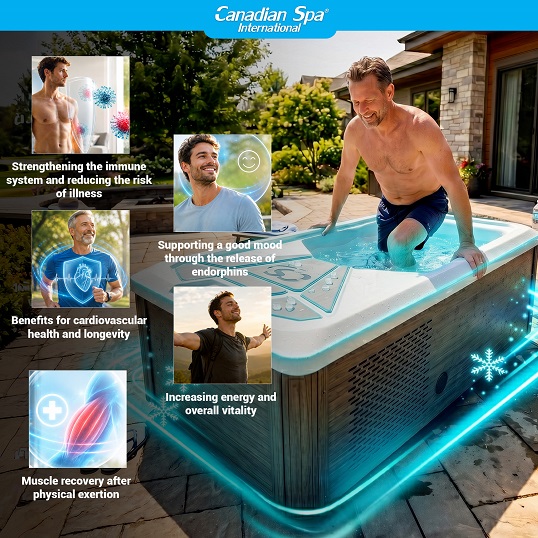
Regular contact with cold brings a range of benefits for recovery, mental resilience, and overall vitality.

Regular cold exposure:
- ● increases resistance to stress
- ● supports muscle recovery and renewal
- ● contributes to better mood, concentration, and alertness
- ● supports the body’s natural defences
- ● contributes to overall vitality and energy
- ● activates natural adaptive processes associated with healthy ageing and longevity
Recovery after physical exertion is one of the most common reasons why athletes use CWI. Cold water helps reduce the feeling of muscle fatigue and discomfort after demanding training and supports subsequent recovery.
At the same time, cold exposure should be seen as part of a broader approach to a healthy lifestyle. It makes the most sense in combination with regular movement, quality sleep, a balanced diet, recovery, and long-term work with stress.
How to start with cold exposure?
The key is gradual progression. For a beginner, the first step can be a short cold-water finish at the end of a regular shower. Once the body begins to get used to the cold, the duration can be gradually extended or you can move on to full immersion in cold water.
There is no need to start with extremely low temperatures. Even milder cold provides the body with a sufficient stimulus. While in the water, it is important to maintain calm breathing and observe the reaction of your own body. Strong uncontrollable shivering, dizziness, weakness, or disorientation are signals to stop the procedure immediately.
People with cardiovascular or other more serious health problems should first consult cold exposure with a doctor.
When cold exposure becomes a regular ritual
A cold shower is the easiest beginning, and natural water offers a unique experience. However, if cold exposure is to become a regular part of your daily routine, a dedicated cold plunge tub brings comfort, controlled conditions, and independence from the weather or season.
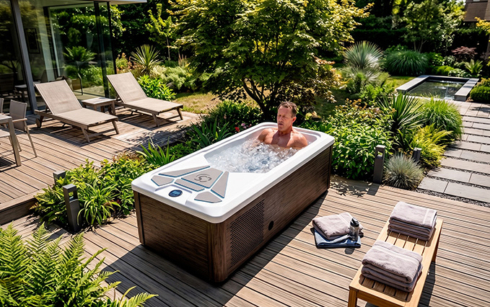
Our popular Cryo Ice Tub is also a response to the growing popularity of cold exposure. Although there are several different models on the current market, we wanted to offer more than just cooling. That is why Cryo Ice Tub features two massage jets, its own filtration system for high hygienic comfort, and designer LED lighting.
A major advantage is its technological versatility – the tub can not only cool the water, but also heat it. This allows you to easily transform a space for ice therapy into a warming home spa for rest and recovery.
Cryo Ice Tub combines cold exposure, recovery, and the comfort of home wellness in a single device, allowing you to create your own ritual exactly according to your current needs.